
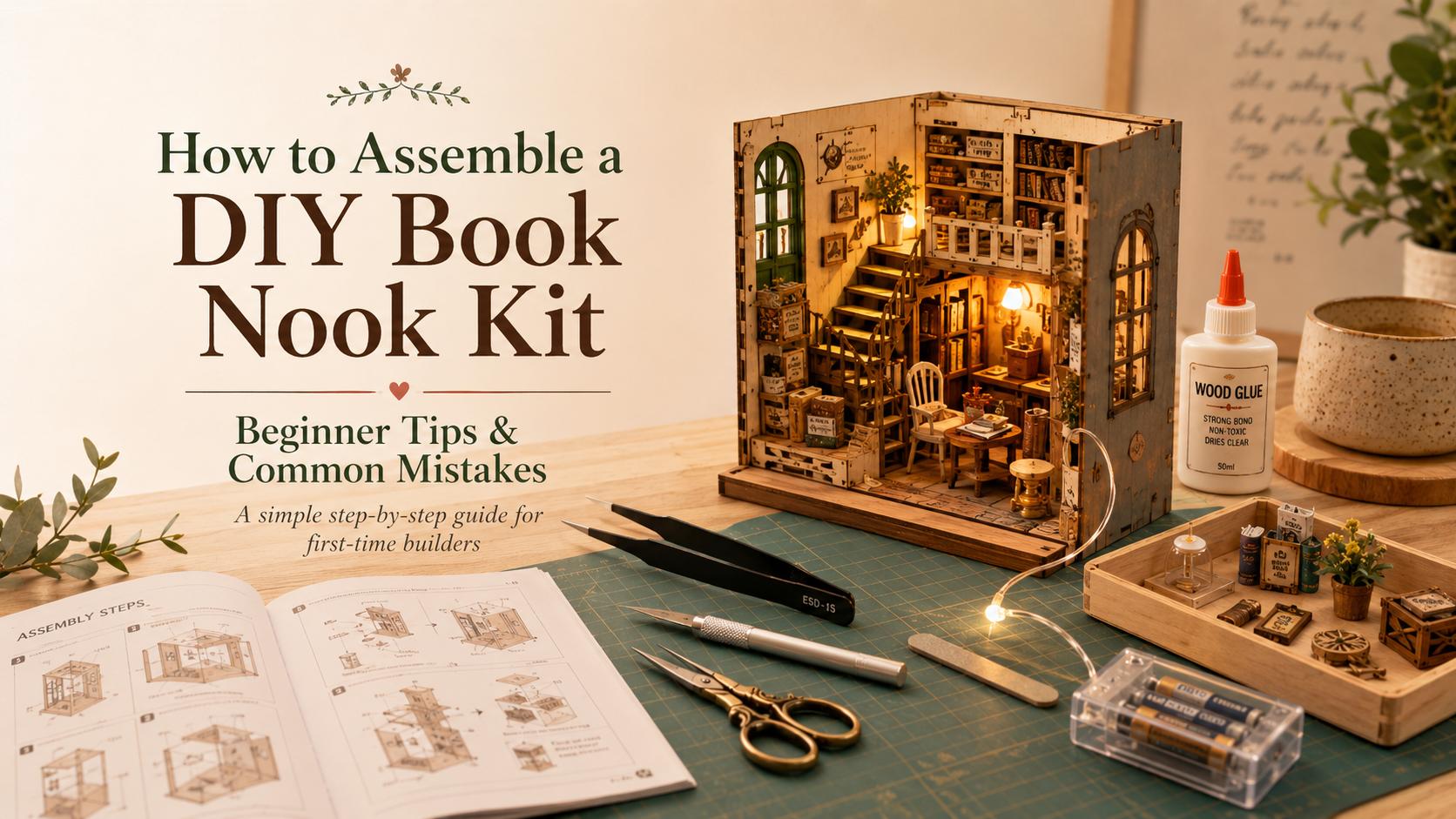
How to Assemble a DIY Book Nook Kit: Beginner Tips and Common Mistakes
DIY book nook kits turn an empty space on your shelf into a small scene with walls, furniture, lighting, and tiny details. If this is your first build, the process can feel a little fiddly at the start. That is normal. Most mistakes happen because people rush the first hour: they remove too many parts, skip the light test, or glue pieces before checking the fit.
This guide walks through the basic build order and the small habits that make assembly easier. If you have not picked a kit yet, start with our DIY book nook kits collection, or browse the best-selling book nook kits if you want a safer first choice.
Table of Contents
- Prepare the tools you need
- Organize all the parts
- Follow the instruction manual
- Install and test the LED lighting
- Helpful assembly tips for beginners
- Common beginner mistakes
- What to build next
1. Prepare the tools you need
Before starting your build, set up a clean table with good lighting. DIY book nook kits usually do not need professional tools, but a few simple items will save you a lot of frustration.
- Precision scissors or a hobby knife for cutting small pieces cleanly.
- White craft glue or wood glue for wooden panels and tiny decorations.
- Tweezers for placing small parts without bending them.
- Sandpaper or a nail file for smoothing rough tabs.
- Batteries for LED lighting if your kit uses a battery box.
Glue and batteries are often not included because of shipping restrictions. If you are unsure what adhesive to prepare, read our guide to the best glue for book nook kits before you start.
2. Organize all the parts
Take a few minutes to read the manual and sort the pieces before assembling anything. This is not the exciting part, but it prevents most beginner problems.
- Separate wooden sheets, paper pieces, accessories, and electronic parts.
- Check the parts list against what came in the box.
- Keep numbered wooden panels on the board until the manual asks for them.
- Test the LED parts early, before they are hidden inside walls or panels.
If a piece is missing or damaged, check the manual first, then use our replacement parts page if you need help with a specific component.
Start with a beginner or intermediate design before trying a large advanced build. Browse our DIY book nook kits or see the best-selling book nook kits if you want a safer first pick.
3. Follow the instruction manual without rushing
Build in the order shown in the manual. Dry fit each part before adding glue, especially walls, shelves, stair rails, windows, and any piece that has a printed side. A part can look almost right and still be facing the wrong direction.
Use a small amount of glue. Too much glue can squeeze out onto visible surfaces, soften thin paper pieces, or make a wall sit unevenly. If a part needs pressure while it dries, hold it in place for a short time instead of adding more glue.
4. Install and test the LED lighting
Lighting is the part that makes a book nook feel finished. Most kits include LED wires, light beads, and either a battery box or another power connection. The wires are thin, so handle them gently.
- Follow the wiring diagram exactly.
- Test the lights before final installation.
- Hide wires behind walls or panels when possible.
- Do not pull wires tight around corners.
- Test the lights again before closing the structure.
If you specifically want a light-up shelf display, browse our book nook kits with LED lights. Every DIY book nook kit in this collection includes LED lighting, though the exact power setup can vary by product.
5. Helpful assembly tips for beginners
- Work slowly during the first few pages of the manual. That is where orientation mistakes usually start.
- Dry fit parts before gluing them permanently.
- Use tweezers for tiny books, bottles, plants, and signs.
- Keep a small tray nearby for fragile decorations.
- Take breaks if your hands get tired. Small parts are harder to place when you rush.
6. Common beginner mistakes
- Using too much glue: extra glue can leave marks and warp thin pieces.
- Skipping the light test: always test LED parts before hiding them inside the structure.
- Removing panels too early: keep numbered pieces attached until the manual calls for them.
- Losing tiny decorations: store small pieces in a tray, cup, or small box.
- Ignoring part direction: printed sides, tabs, and slots matter more than they first appear.
7. What to build next
A DIY book nook kit is easier when you slow down at the beginning. Sort the pieces, test the lights, use less glue than you think you need, and keep small parts in one place. The finished shelf scene will look better, and the build itself will feel less stressful.
Ready for your next project? Browse new book nook kits, or go back to the full DIY book nook kits for adults collection.